How AI Is Transforming Businesses in 2026 | ORBITDOR
AI Automation
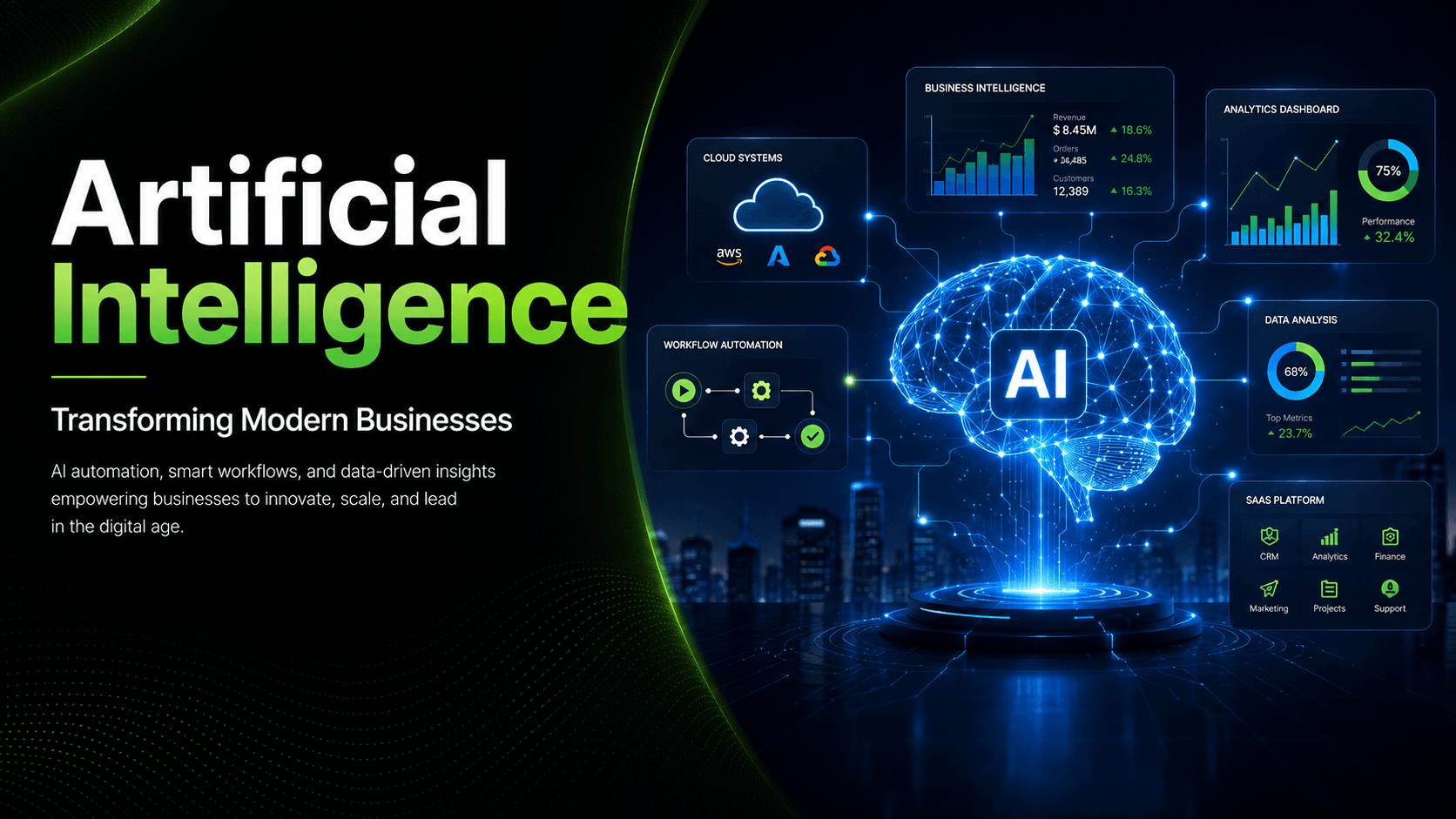
How Artificial Intelligence Is Transforming Modern Businesses in 2026
Discover how artificial intelligence is helping businesses automate repetitive work, improve customer experiences, analyze data, and build smarter digital products.
Artificial Intelligence, commonly known as AI, refers to technologies that allow computers and software systems to perform tasks that normally require human intelligence.
These tasks can include:
Understanding text Recognizing images Answering questions Analyzing data Making predictions Automating workflows Generating content Assisting customers Detecting patterns
AI is no longer limited to research laboratories or large technology companies.
Businesses of all sizes are now using AI to improve productivity, reduce manual work, and build better digital experiences.
Why AI Is Important for Modern Businesses
Modern businesses manage large amounts of information every day.
It can understand the content of the form, classify the request, generate a response, assign the lead to the correct person, and update the CRM automatically.
This makes workflows more intelligent and flexible.
Customer Support Automation
Customer support is one of the most common areas where AI is being used.
AI-powered support systems can:
Answer frequently asked questions Provide instant responses Search company documentation Collect customer information Categorize support requests Create support tickets Recommend solutions Escalate complex issues to human agents
This helps businesses provide faster support without requiring employees to manually answer every basic question.
AI Chatbots and Virtual Assistants
Modern AI assistants can communicate with customers using natural language.
Businesses can integrate AI assistants into:
Websites Mobile applications Customer portals SaaS platforms Internal dashboards Messaging systems
An AI assistant can help users find products, understand services, submit inquiries, or navigate a digital platform.
The goal is not simply to create a chatbot.
A properly designed AI assistant should be connected with business data, APIs, permissions, and workflows.
AI in Sales and Lead Management
Sales teams can also benefit from AI automation.
AI can help businesses:
Analyze new leads Categorize leads Prioritize high-value opportunities Generate follow-up messages Summarize conversations Assign leads to sales representatives Update CRM records Identify inactive leads Track customer intent
This can significantly reduce manual administrative work for sales teams.
AI for Data Analysis
Businesses often collect large amounts of data but struggle to understand it.
AI-powered systems can identify patterns and provide useful insights.
For example, a business may use AI to understand which products are performing well, which customers are likely to convert, or which services need improvement.
AI in Software Development
Artificial intelligence is also changing software development.
Software engineers can use AI tools for:
Code assistance Debugging Documentation Test generation Code reviews Architecture suggestions Data analysis Development automation
However, professional software engineering is still required.
AI should support engineers rather than replace proper engineering practices.
AI-Powered SaaS Applications
SaaS companies are increasingly adding AI features to their platforms.
Examples include:
AI writing assistants Smart search Recommendation systems Automated reports AI customer support Document analysis Predictive analytics Intelligent dashboards
AI can make a traditional software product more useful by helping users complete tasks faster.
Online stores can use AI to better understand customer behavior and provide more relevant experiences.
AI Document Processing
Many businesses still manually process documents.
AI can help extract and organize information from:
Invoices Contracts Forms Reports Applications Receipts Business documents
The extracted information can then be stored in a database or sent to another business system.
This can reduce repetitive data-entry work.
AI Workflow Automation
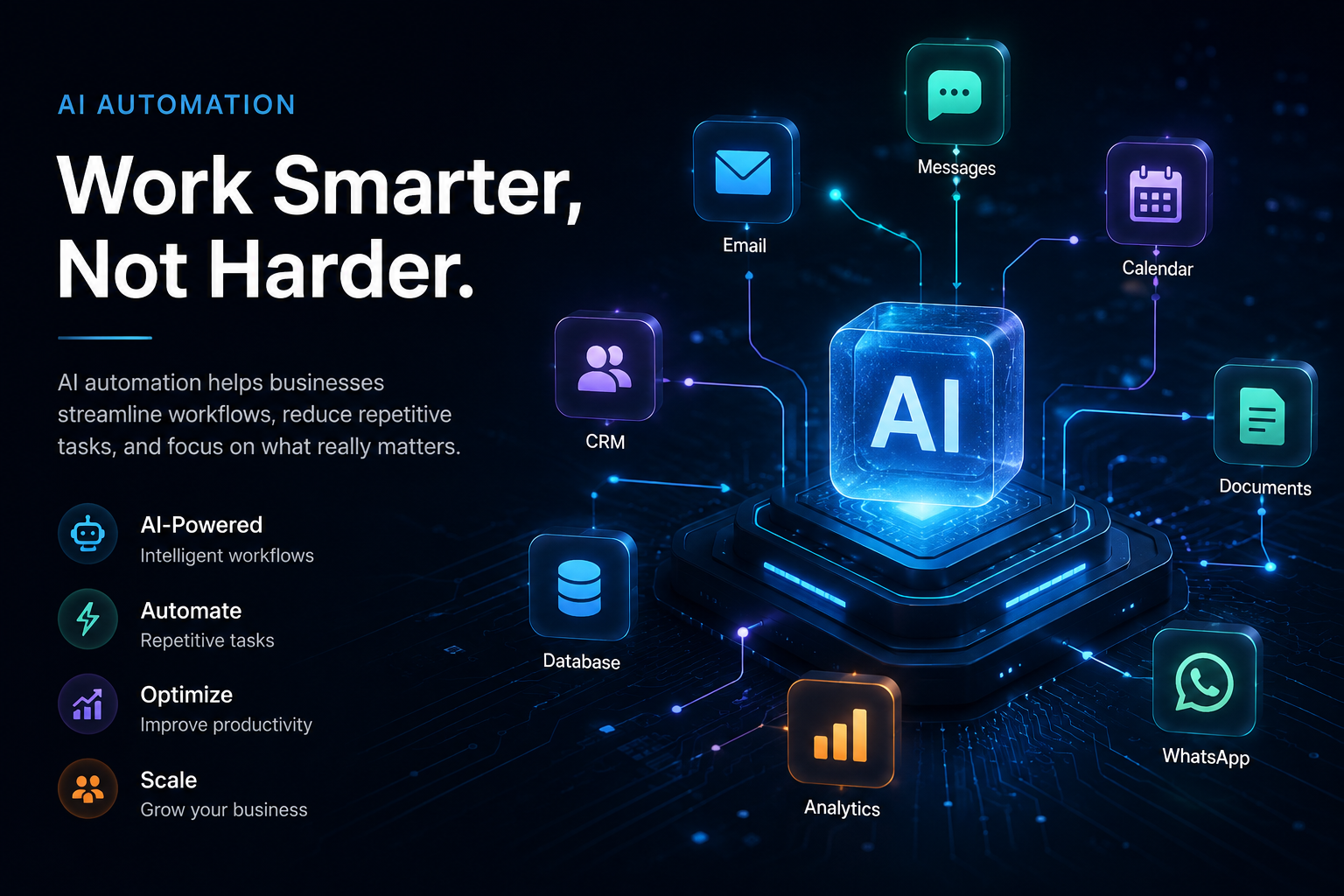
One of the biggest advantages of AI is connecting multiple systems together.
For example:
A customer submits an inquiry.
The AI system can:
Read the inquiry Understand customer requirements Categorize the lead Store it in the CRM Assign it to the correct team member Generate a personalized response Notify the sales team Schedule a follow-up
All of this can happen automatically.
Benefits of AI Automation
Businesses can gain several advantages from properly implemented AI automation.
Increased Productivity
Employees spend less time on repetitive tasks.
Faster Customer Service
Customers receive faster responses and support.
Better Decision Making
AI can analyze large datasets and provide useful insights.
Reduced Operational Work
Manual tasks can be automated across departments.
Scalability
Businesses can handle more customers and data without increasing manual workload at the same rate.
Improved User Experience
AI can provide personalized and intelligent digital experiences.
Challenges of AI Implementation
AI should not be implemented without proper planning.
Businesses need to consider:
Data privacy Security Incorrect AI responses Access permissions Data quality Integration complexity Cost management Human oversight
AI systems should always have proper validation and safeguards.
Sensitive business information should only be accessible to authorized users.
AI and Data Security
Security is especially important when AI systems work with company or customer data.
A professional AI implementation should include:
Authentication Role-based access control Secure APIs Data encryption Audit logs Input validation Sensitive data protection Monitoring
AI should only access the information required for its specific task.
Human and AI Collaboration
The strongest use of AI is often collaboration between people and intelligent systems.
AI is good at:
Processing large amounts of information Automating repetitive tasks Finding patterns Generating drafts Providing fast assistance
Humans are still important for:
Strategic decisions Creativity Complex judgment Relationship building Quality control Business leadership
The best systems combine both.
The Future of AI Automation
AI automation will continue becoming a major part of modern software.
Businesses will increasingly integrate AI into:
CRM platforms ERP systems SaaS applications eCommerce platforms Customer service Marketing systems Internal company dashboards Business analytics
Instead of using AI as a separate tool, companies will increasingly build AI directly into their existing workflows.
Should Your Business Use AI?
Not every business process requires AI.
Businesses should first identify repetitive or time-consuming tasks.
Good starting points include:
Customer support Lead management Document processing Reporting Internal search Data analysis Email automation Content workflows
The goal should be to solve a real business problem rather than adding AI only because it is popular.
Final Thoughts
Artificial Intelligence is changing how businesses operate, communicate, analyze information, and build software.
Companies that use AI strategically can reduce repetitive work, improve productivity, and create better customer experiences.
At Orbitdor, we focus on building modern software solutions, AI automation systems, SaaS products, web applications, and intelligent business workflows.
The future of software is not only about building applications.
It is about building smarter systems that can automate, assist, analyze, and continuously improve business operations.